




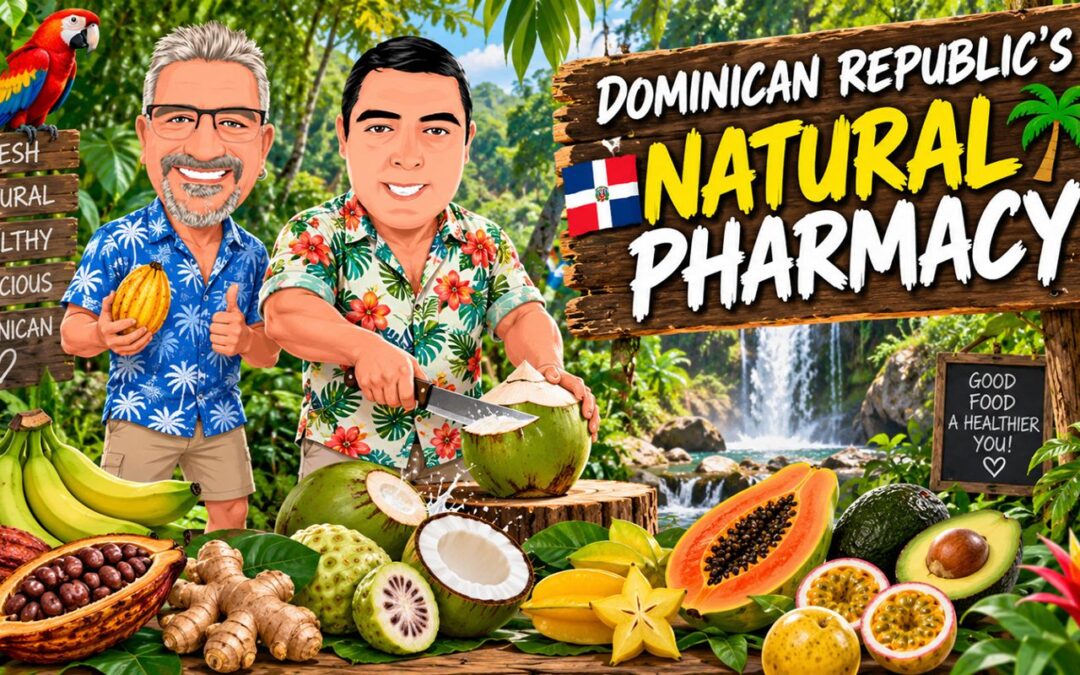
🌴 The Dominican Republic’s Natural Pharmacy 🇩🇴
Incredible Tropical Foods Growing All Around Us — Their History, Nutrition & Some Seriously Surprising Facts
The Dominican Republic’s Natural Pharmacy: What if some of the world’s most fascinating foods weren’t sitting on the shelves of an expensive health-food store……but growing on a tree at the bottom of your garden?
Welcome to the Dominican Republic’s Natural Pharmacy. 🇩🇴🌴
The Dominican Republic’s Natural Pharmacy
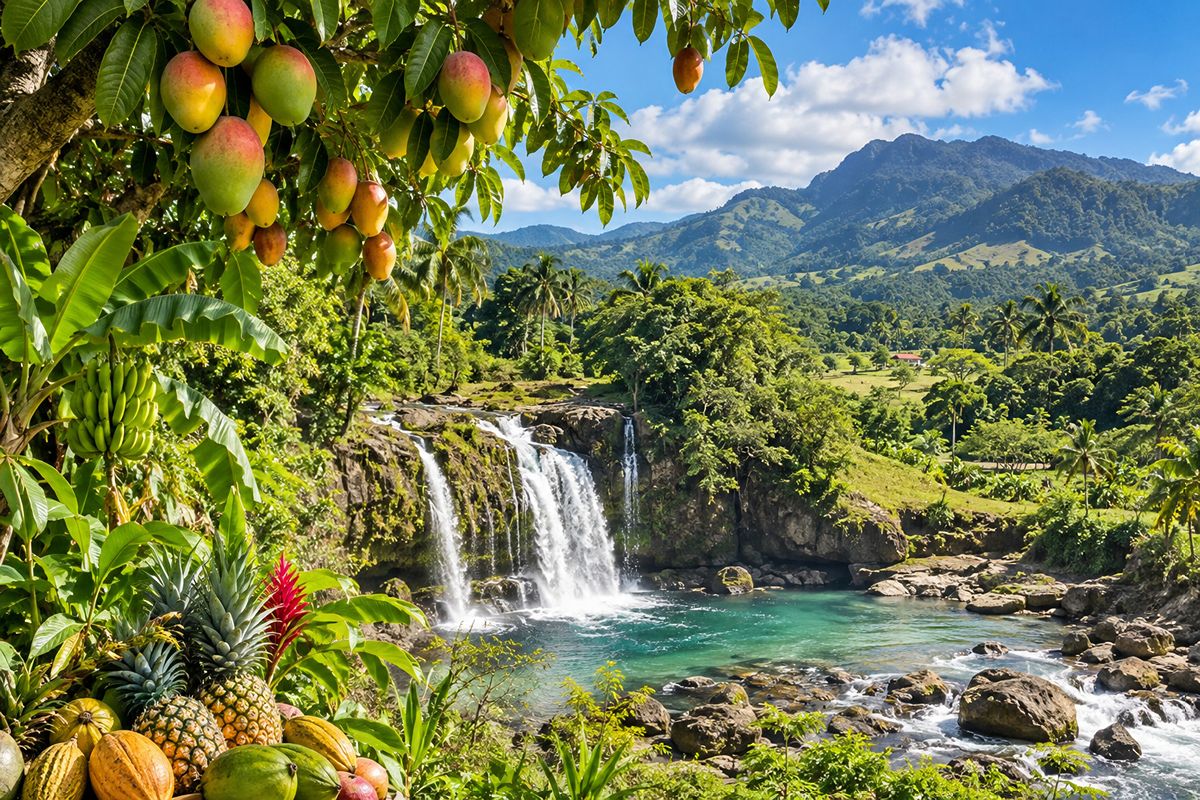
Spend enough time traveling through the Dominican countryside and you begin to realize just how extraordinarily fertile this island is. Coconuts hang above beaches. Mango’s and papaya’s appear almost effortlessly in gardens. Avocados can grow to sizes that surprise visitors from Europe and North America. Cacao pods emerge directly from tree trunks. Bananas flourish beside country roads, while chinola, guava, starfruit and countless other tropical foods fill local markets.
At certain times of year, it can genuinely feel as though food is dripping from the trees.
And behind many of these familiar foods are some extraordinary stories.
Some traveled thousands of miles across oceans before reaching the Caribbean. Some contain enzymes capable of tenderising meat. One technically isn’t a fruit at all. Another is a berry despite looking nothing like one. And one rather innocent-looking tropical fruit can contain considerably more vitamin C by weight than the orange most of us grew up believing was the undisputed vitamin-C champion.
After more than 50 years of combined experience living, working and doing business in the Dominican Republic, our in depth knowledge of this country covers so much more than real estate.
So come with us as we explore a different side of life in the Dominican Republic.
This isn’t just about food.
It’s about history, nature, culture, nutrition — and one of the many reasons we love living here.
🥥 1. Coconut — The Great Caribbean Impostor
Few things say “Caribbean” quite like a coconut palm leaning over a white-sand beach, which makes our first fact particularly surprising:
🤯 Coconuts aren’t originally Caribbean.
Their ancient origins lie thousands of miles away in the Indo-Pacific and Indian Ocean world. Human migration, exploration and maritime trade eventually carried coconuts throughout the tropics until they became almost inseparable from our image of Caribbean life.
And coconuts were remarkably well equipped for the journey.
🌊 A Fruit Designed to Travel
That thick fibrous husk isn’t just packaging. It provides protection and buoyancy, allowing coconuts to float in seawater and potentially reach distant shores. Humans accelerated that journey enormously by carrying coconuts aboard ships as ship ballasts as well as food and supplies.
The Story of Palm Beach
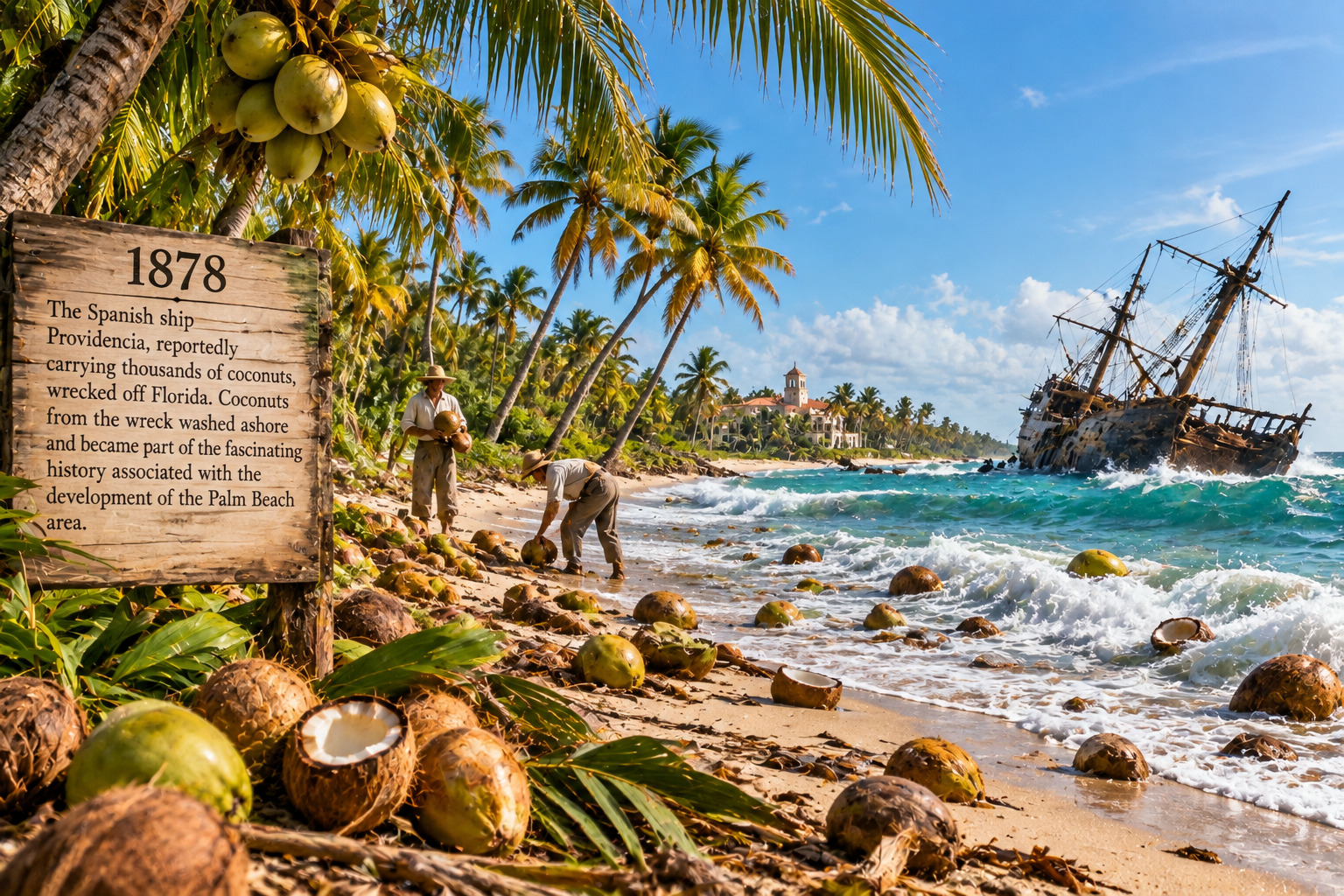
One remarkable example occurred in 1878, when the Spanish ship Providencia, reportedly carrying thousands of coconuts, wrecked off Florida. Coconuts from the wreck washed ashore and became part of the fascinating history associated with the development of the Palm Beach area.
💧 What’s in Coconut Water?
Fresh coconut water contains:
- Potassium — important for normal nerve and muscle function
- Other electrolytes
- Natural carbohydrates
- Plenty of water
It’s refreshing, naturally packaged and particularly enjoyable when served ice-cold under a Dominican sun.
And virtually every part of the coconut can be useful:
Water • Flesh • Milk • Oil • Fibre • Fuel • Rope • Utensils • Building materials
🌟 WOW FACT: Medical literature even contains extraordinary historical reports of coconut water being administered intravenously in extreme circumstances when conventional IV fluids weren’t available.
That’s fascinating medical history — definitely not something anybody should attempt themselves!
Perhaps the coconut really is nature’s original convenience store:
Food, drink and packaging included — and you don’t even need a recycling bin.
🍍 2. Pineapple — Piña
Pineapple may look thoroughly at home in the Dominican Republic, but its story began elsewhere in South America, where Indigenous peoples were cultivating and transporting it long before Europeans arrived.
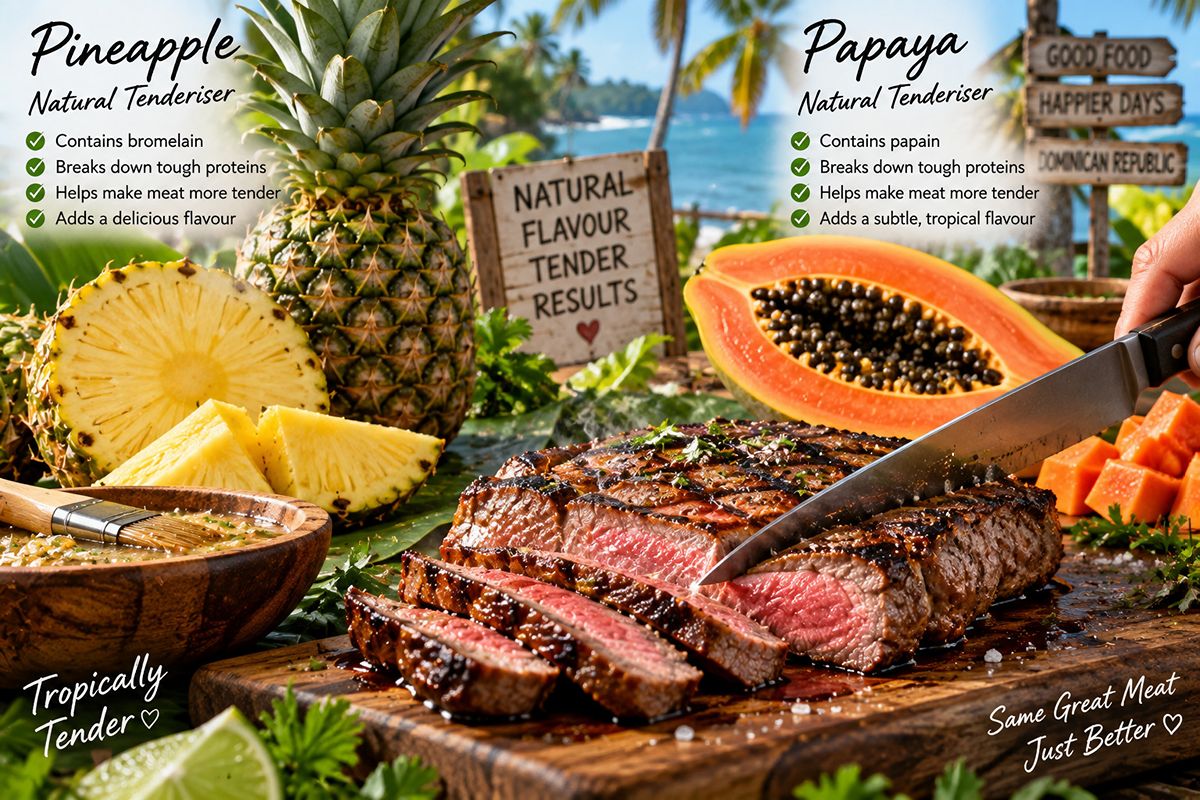
Nutritionally, pineapple provides vitamin C, manganese and a particularly interesting group of enzymes called bromelain.
And that’s where things get strange.
🤯 The Fruit That Eats You Back!
Great for Tenderising Meat
Bromelain can break down proteins. That’s why pineapple has traditionally been used as a meat tenderiser. It also helps explain that peculiar tingling or tender sensation some people experience after eating plenty of fresh pineapple.
So while you’re happily eating your pineapple…the pineapple is having a tiny nibble back. 😂
🛒 Choosing One
Look for a pineapple that feels heavy for its size, has a healthy-looking crown and gives off a pleasant sweet aroma around the base.
🧡 3. Papaya — Lechosa
Another Dominican favourite with some clever chemistry hiding inside it. Papaya originated in tropical America and subsequently spread around much of the tropical world.
It’s a useful source of:
Vitamin C • Fibre • Carotenoids • Papain
Papain is the interesting one.
🤯 Nature’s Meat Tenderiser
Papain is a protein-digesting enzyme powerful enough to have been used commercially to tenderise meat. So using papaya alongside tougher cuts of meat isn’t simply an old culinary trick.
There’s chemistry happening on the plate.
As papaya ripens, its skin generally changes from green towards yellow and orange and the flesh begins to yield slightly when gently pressed.
🍌 4. Banana — The Fruit That Grows Upwards
Bananas are so commonplace in the Caribbean that it’s easy to overlook how extraordinary they actually are.Their ancestors came from Southeast Asia and the western Pacific, and humans carried them across continents until they eventually became one of the world’s most recognizable foods.
Many Banana Options to Try
🍌 Bananas & Plantains — More Variety Than You Might Think!
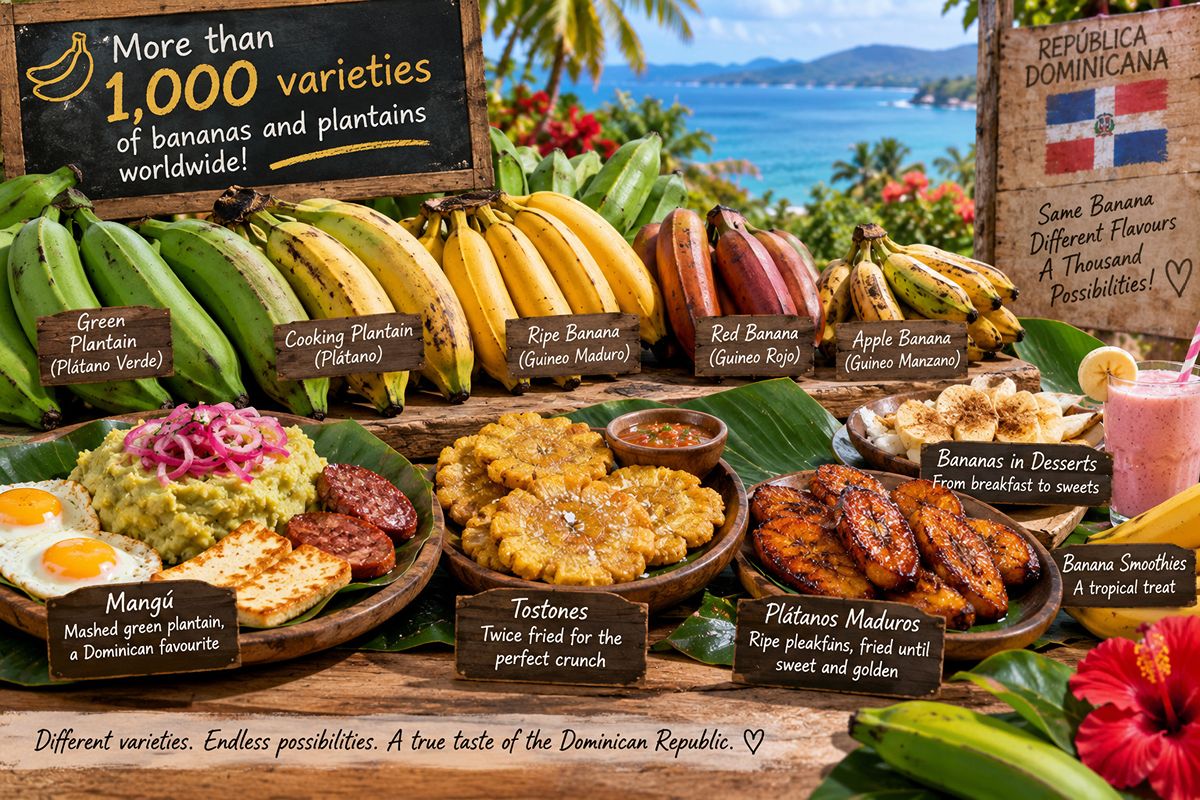
There are more than 1,000 varieties of bananas and plantains worldwide, and here in the Dominican Republic they appear in everything from breakfast to dessert. Green plantains are boiled and mashed with butter or oil to make the Dominican favourite mangú, or sliced, fried, flattened and fried again to create crispy tostones. When allowed to ripen, sweet yellow plantains — plátanos maduros — are often fried until beautifully caramelized, making a deliciously sweet accompaniment to a traditional Dominican meal.
But next time you see bananas growing, look carefully.
🤯 They’re Turning Upwards
Developing bananas respond to gravity and light and curve upwards rather than simply continuing to hang down.
This response is known as negative geotropism. And here’s another great piece of banana trivia: A group of bananas is commonly called a hand. Individual bananas?
FINGERS. 🍌✋
Bananas also provide potassium, vitamin B6, fibre and carbohydrates, while greener bananas contain more resistant starch, which behaves somewhat like dietary fibre and can provide food for beneficial gut bacteria.
Suddenly the humble banana isn’t quite so humble.
🌾 5. Sugar Cane — The Sweet Grass That Changed the Caribbean
Here’s something many people don’t realize:
Sugar cane isn’t a fruit at all.
It’s a giant grass. 🌱
Some varieties grow several metres tall, storing wonderfully sweet juice inside their thick stalks. Sugar cane has ancient roots in New Guinea and Southeast Asia and travelled westward over centuries before Europeans carried it across the Atlantic.It subsequently became enormously important on Hispaniola and throughout the Caribbean.
And its influence extends far beyond something sweet to put in your coffee.
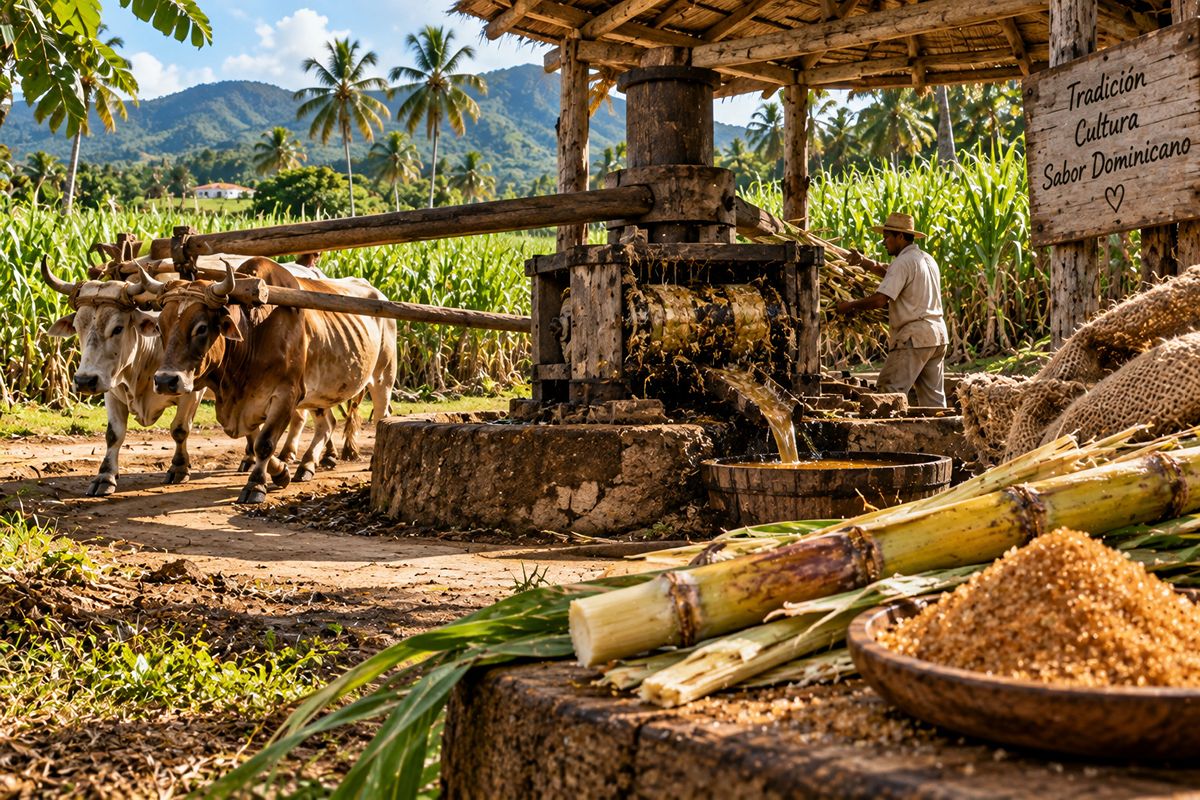
Sugar Cane Pressed in the Countryside
Sugar cane became deeply intertwined with Caribbean agriculture, trade, migration, colonialism and, tragically, the history of slavery. Its story is therefore both fascinating and sobering.
🥤 Guarapo de Caña
Freshly pressed sugar-cane juice—guarapo de caña—is a wonderfully refreshing drink and provides rapidly available carbohydrates along with small amounts of minerals and plant compounds.
But “natural” doesn’t automatically mean unlimited.
Sugar-cane juice contains a substantial amount of sugar, so it’s something to enjoy rather than regard as medicine.
🤯 WOW FACT
A sugar-cane stalk is largely water, yet through photosynthesis the plant captures energy from sunlight and ultimately produces the sweetness that humans transform into:
Cane juice → Sugar → Molasses → and, of course, Dominican rum. 🇩🇴
One plant – An extraordinary amount of Caribbean history.
🥑 6. Dominican Avocado — Aguacate
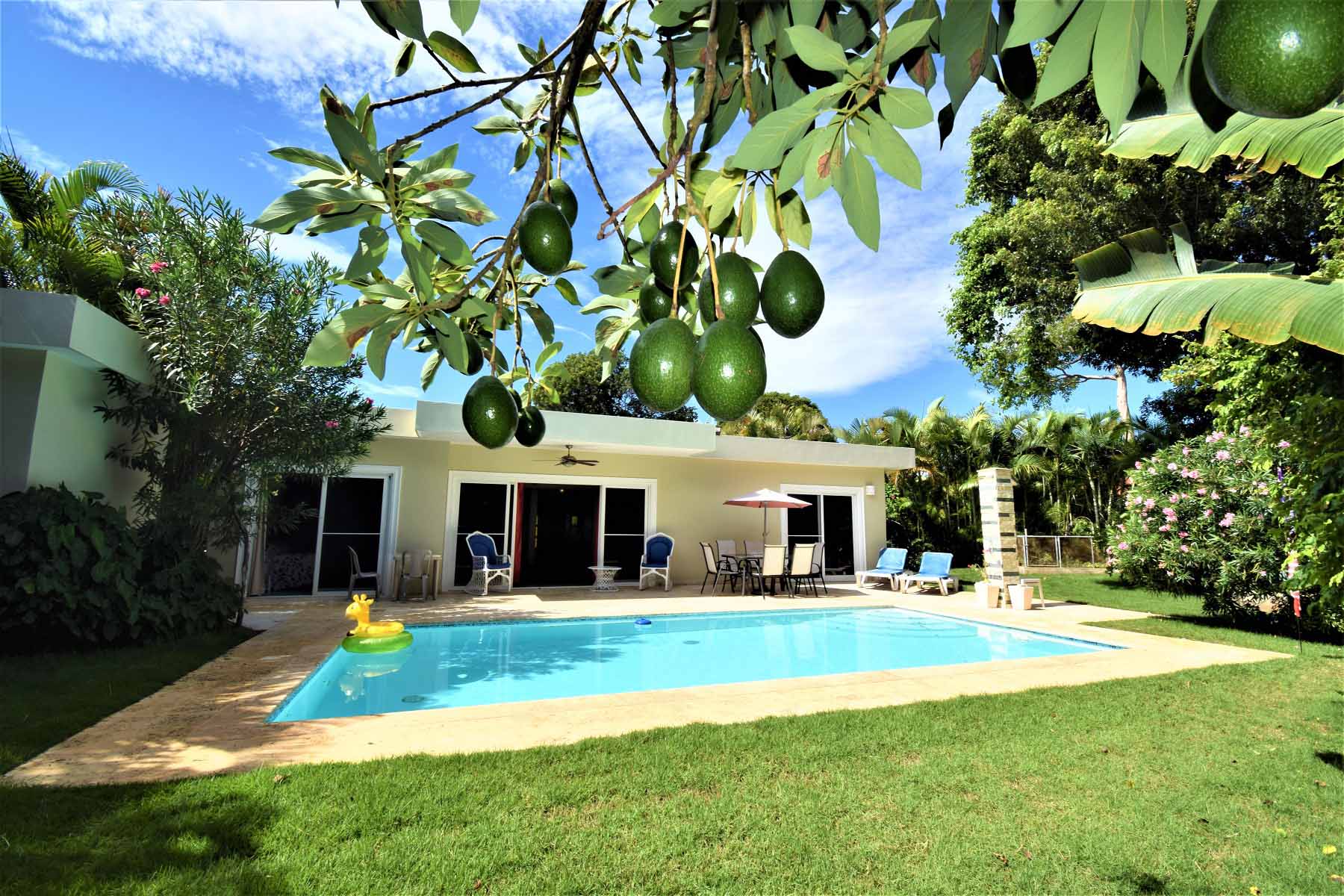
Dominican avocados can be absolute monsters!
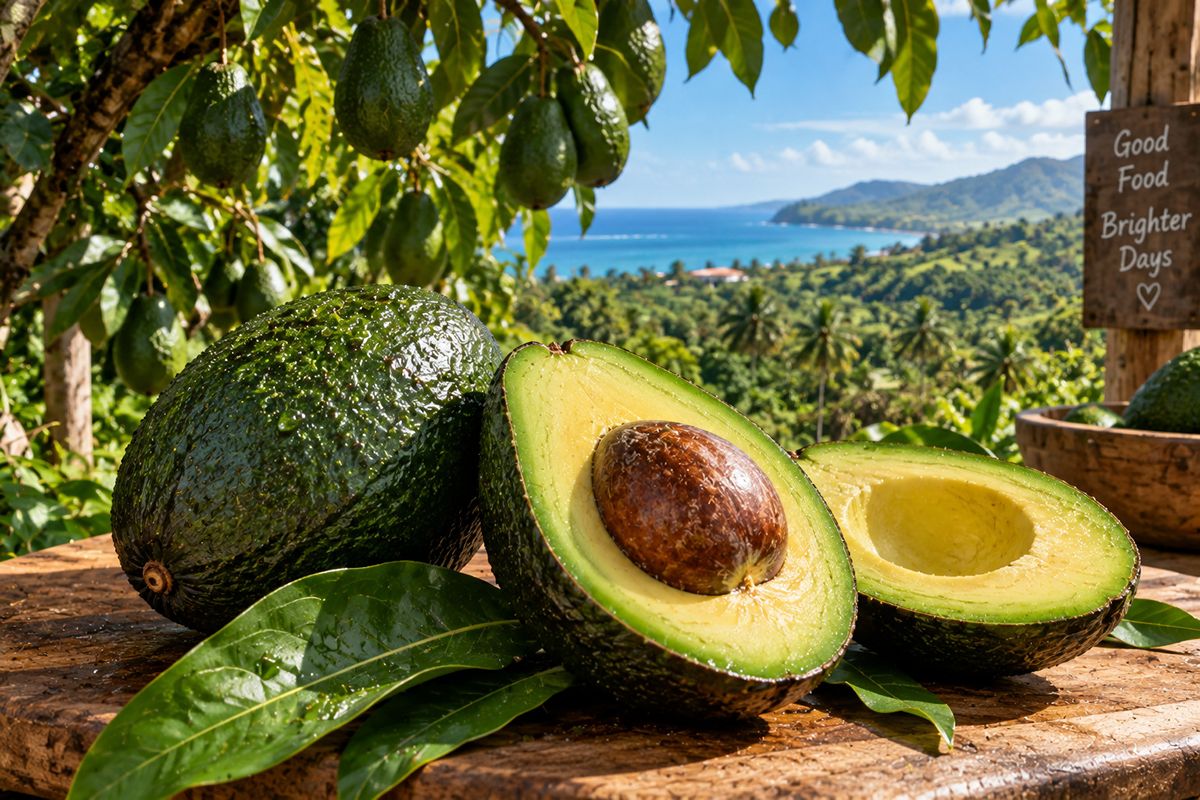
Avocado’s – Full of Health Goodness
Put one beside the small Hass avocados familiar to shoppers in Europe or North America and sometimes the comparison hardly seems fair. Avocados originated in Mexico and Central America and have been eaten by humans for thousands of years.
Unlike most fruits, much of the avocado’s energy comes from fat, particularly monounsaturated fat.
They also provide:
Fibre • Potassium • Folate
But here’s the dinner-party fact:
🤯 Botanically, an avocado is a berry.
Yes. – A berry.
A very large berry containing one enormous seed — but a berry nonetheless. And with some Dominican avocados, you could almost play rugby with them!
🫚 7. Ginger — Jengibre
Ginger has been part of traditional food and medicine for thousands of years.
Originating in tropical Asia, it travelled along ancient trade routes and eventually found a natural home throughout much of the tropical world.
Its characteristic flavour comes partly from compounds known as gingerols, which have attracted scientific interest for their biological activity.
What’s particularly interesting is that ginger isn’t simply an old folk remedy that modern science ignored.
Research has found evidence supporting ginger’s usefulness for certain types of nausea, although that doesn’t make it a cure-all.
Sometimes traditional knowledge was onto something long before anybody wearing a laboratory coat arrived.
🍐 8. Guava — Guayaba
Guava doesn’t exactly shout “superfood.” It looks relatively ordinary. Which makes this one of our favourite surprises.
🤯 Guava Can Beat an Orange at Its Own Game
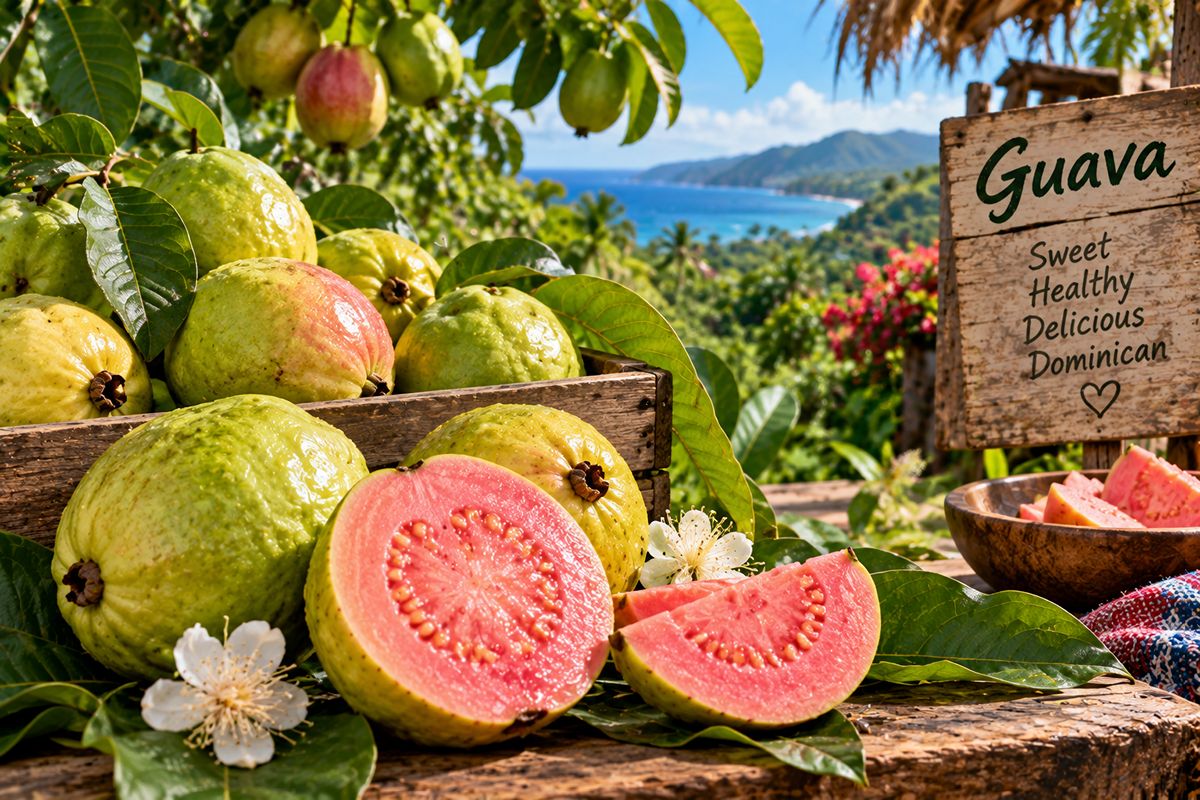
The Dominican Republic’s Natural Pharmacy
Guava can contain considerably more vitamin C by weight than an orange, although the exact amount varies by variety and ripeness.
It can also provide:
Fibre • Potassium • Carotenoids • Polyphenols
And unlike many exotic imported “superfoods,” guava grows happily throughout the tropical Americas.
Sometimes extraordinary nutrition is hiding inside something completely ordinary.
🍈 9. Noni — The Fruit You’ll Never Forget
If you’ve never smelled a fully ripe noni…
Prepare yourself. 😂
Noni originated in tropical Asia and the Pacific and has a long history of traditional use, particularly across Polynesia, before spreading into other tropical regions. It contains vitamin C and numerous plant compounds. But its greatest claim to fame may be its aroma.
🤯 Meet the “Cheese Fruit”
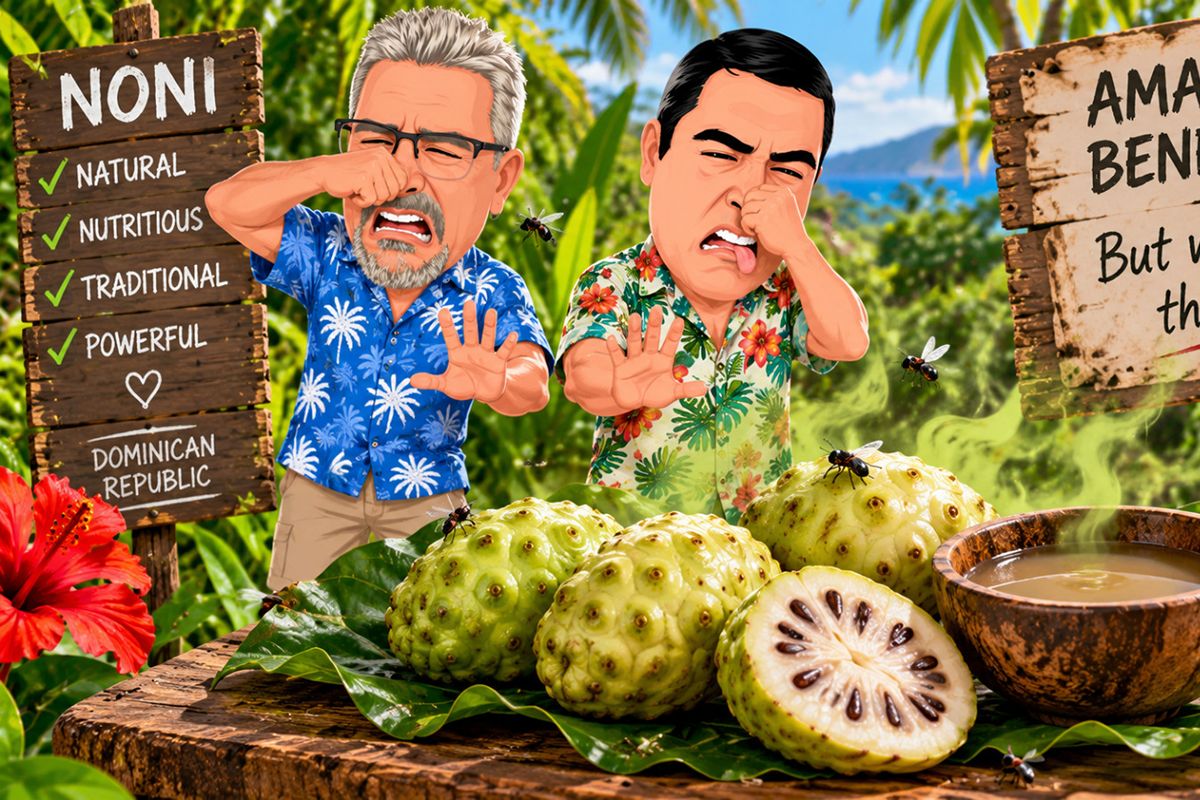
Noni – The Cheese Fruit
As noni ripens, it becomes pale, increasingly soft and develops a smell so distinctive that it has earned nicknames including “cheese fruit.”
People have made some extraordinary health claims about noni over the years.
This is where we need to separate fascinating traditional use from established medicine.
There isn’t good clinical evidence demonstrating that noni cures diseases, and concentrated noni products aren’t appropriate for everyone.
Still, if you’re looking for a tropical fruit you’ll remember…
Noni will make absolutely certain you don’t forget it.
🟡 10. Passion Fruit — Chinola
Ah, chinola. One of the great flavours of the Dominican Republic. Originally from South America, passion fruit has travelled around the tropical world and become an everyday favourite here.
It provides vitamin C, fibre and antioxidant plant compounds.
But there’s a wonderfully Dominican twist to the nutritional story.
🤯 Sometimes the Fruit Isn’t the Problem…
Take beautiful fresh chinola. Add water. Then add several heroic spoonfuls of sugar…and suddenly we’ve changed the nutritional equation considerably! 😂 The chinola was perfectly innocent until we got involved.
And here’s another useful tip.
Unlike many fruits, a slightly wrinkled chinola can be exactly what you’re looking for. The skin often wrinkles as the fruit ripens and develops its characteristic flavour.
⭐ 11. Starfruit — Carambola
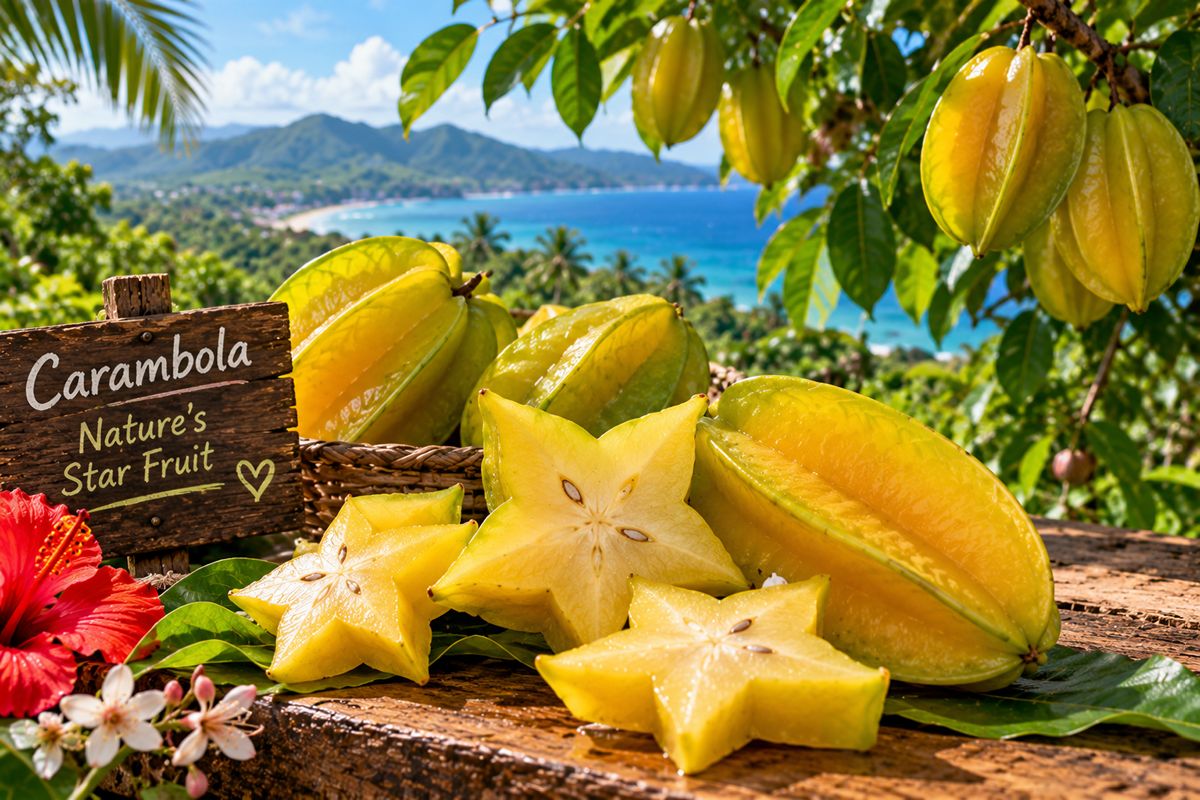
Starfruit – Delicious But not Suitable for Everyone
Sometimes nature does the marketing for you. Slice a carambola across the middle and you get an almost perfect:
⭐ STAR
Originally from tropical Asia, starfruit is now grown throughout many tropical regions, including here in the Caribbean.
It contains vitamin C, fibre and antioxidant plant compounds.
There is, however, something important to know.
⚠️ Starfruit Isn’t Suitable for Everyone
People with kidney disease may need to avoid starfruit, because certain compounds in the fruit can accumulate when kidney function is impaired. Anyone with kidney disease should follow their doctor’s advice. For everyone else, it remains one of nature’s more beautifully designed tropical foods.
No fancy chef required – Nature has already done the presentation.
🍫 12. Cacao — Yes, Chocolate Really Does Grow on Trees
Now we come to something very close to many people’s hearts – Chocolate.
But long before the chocolate bar came the extraordinary fruit of the cacao tree. Cacao originated in tropical America, and humans were consuming it thousands of years before anybody dreamed of wrapping a chocolate bar in shiny paper.
Today, cacao is also an important Dominican agricultural product – And the journey is remarkable:
🌳 POD → BEANS → FERMENTATION → DRYING → ROASTING → CHOCOLATE
But here’s the part many chocolate lovers have never seen.
🤯 Cacao Pods Can Grow Straight Out of the Trunk
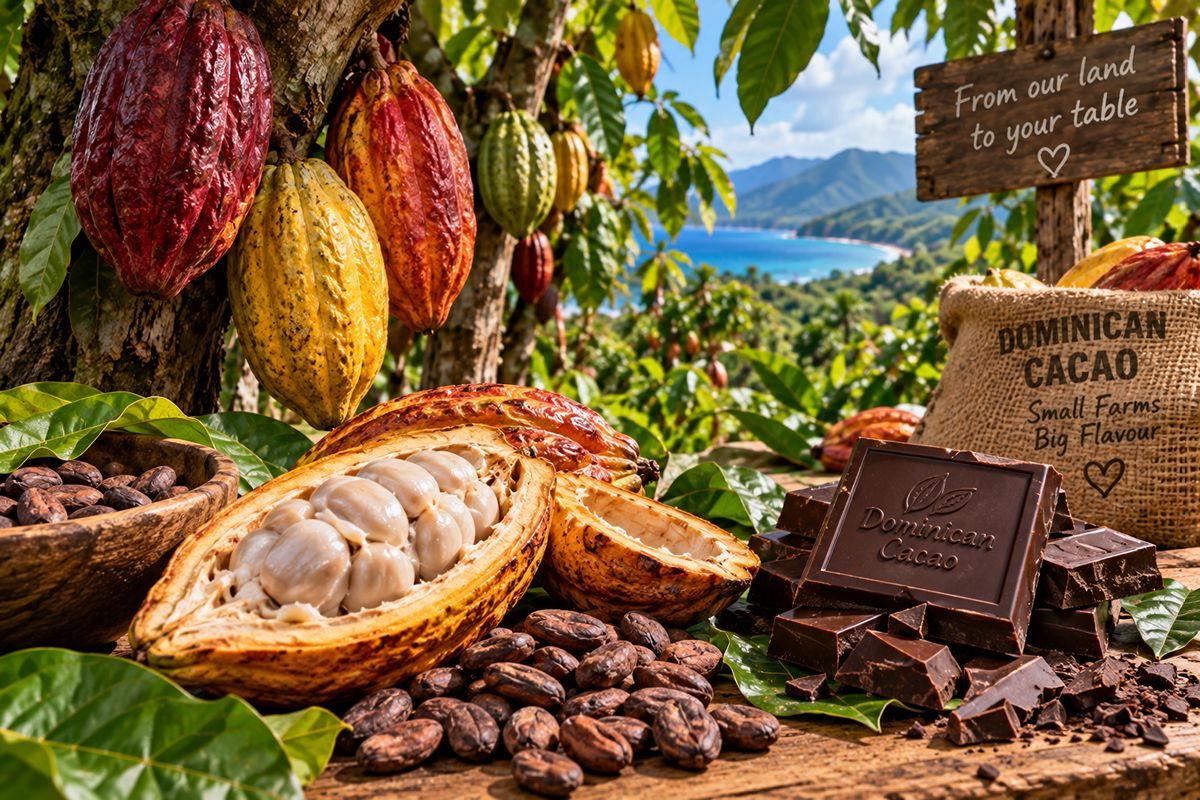
Did You Know Chocolate Grows on Trees?
Rather than hanging from delicate little branches like apples or oranges, cacao flowers and pods can emerge directly from the trunk and major branches of the tree.
It almost looks as though someone has stuck them on.
Cacao also contains flavanols, plant compounds studied for their relationship with cardiovascular and blood-vessel function.
Unfortunately, before anybody rushes out for a family-size chocolate bar…
Raw cacao and heavily sweetened chocolate aren’t nutritionally the same thing. 😂
Nice try, though.
🌴 Perhaps the Real Medicine Is the Lifestyle
And perhaps that’s the biggest lesson from our journey through the Dominican Republic’s “Natural Pharmacy.”
None of these foods is a miracle cure. Food isn’t medicine in a bottle, and good nutrition isn’t a substitute for appropriate medical care. But many of these foods are genuinely nutritious, and they’re surrounded by remarkable stories.
We’ve discovered a coconut designed to travel across oceans.
A pineapple that can tenderise your dinner.
A papaya containing a protein-digesting enzyme.
Bananas that turn upwards.
A giant grass that changed Caribbean history.
An avocado that’s actually a berry.
An ancient root that modern scientists continue to study.
A humble guava capable of outperforming an orange for vitamin C.
A fruit that smells suspiciously like cheese.
A chinola that was perfectly healthy until somebody found the sugar bowl.
A fruit that arrives pre-cut into stars.
And chocolate growing directly from a tree trunk.
Yet perhaps the greatest thing about all of them is this:
They’re not exotic here.
Happy Healthy Living
They’re everyday Dominican life.
You find them piled high in local markets.
Growing on fincas.
Hanging over garden walls.
Being sold beside country roads.
And sometimes growing just a few metres from your own front door.
🇩🇴 Living in the Dominican Republic Is About More Than Owning a Property
This is something we’ve believed for a very long time.
When someone contacts DR Property Guys about buying property in the Dominican Republic, we don’t see our job as simply finding a villa, collecting a commission and disappearing into the Caribbean sunset.
Because choosing a home here means choosing something much bigger.
You’re choosing a life.
The morning trip to the fruit stand.
The guy selling coconuts beside the road.
The local colmado where everybody eventually knows your name.
Fresh produce.
Outdoor living.
Beaches and mountains.
Swimming.
Walking.
Sunshine.
Neighbours.
Community.

Choose Life
And perhaps most importantly, the opportunity to slow life down just enough to start enjoying it again.
That’s one reason we produce videos and articles about food, culture, history, travel and everyday Dominican life alongside our coverage of Dominican Republic real estate, North Coast properties, relocation and investment.
A house is important.
But the house is only the container.
The life you build around it is what really matters.
After more than 50 years of combined experience living, working and doing business in the Dominican Republic, we’re still discovering things about this extraordinary country ourselves.
And that’s exactly how we think it should be.
If you’re considering moving to the Dominican Republic, retiring here or purchasing property on the North Coast, we’re always happy to talk — even if you’re only at the beginning of the journey and have a hundred questions.
That’s what we’re here for.
📞 Contact DR Property Guys

Phil & Tay – DR Property Guts
WhatsApp: Tay: +1 809 756 7611 – Phil: +1 809 707 3598
And if you haven’t already, please do us a huge favour and subscribe to our DR Property Guys YouTube channel and hit the Subscribe button. You’ll find property tours, relocation information, Dominican lifestyle videos and plenty more about what it’s really like to call this remarkable country home. 🇩🇴🌴
DR Property Guys — we’re not just here to show you where you could live. We want to show you why you might want to live here.



Social Links: