




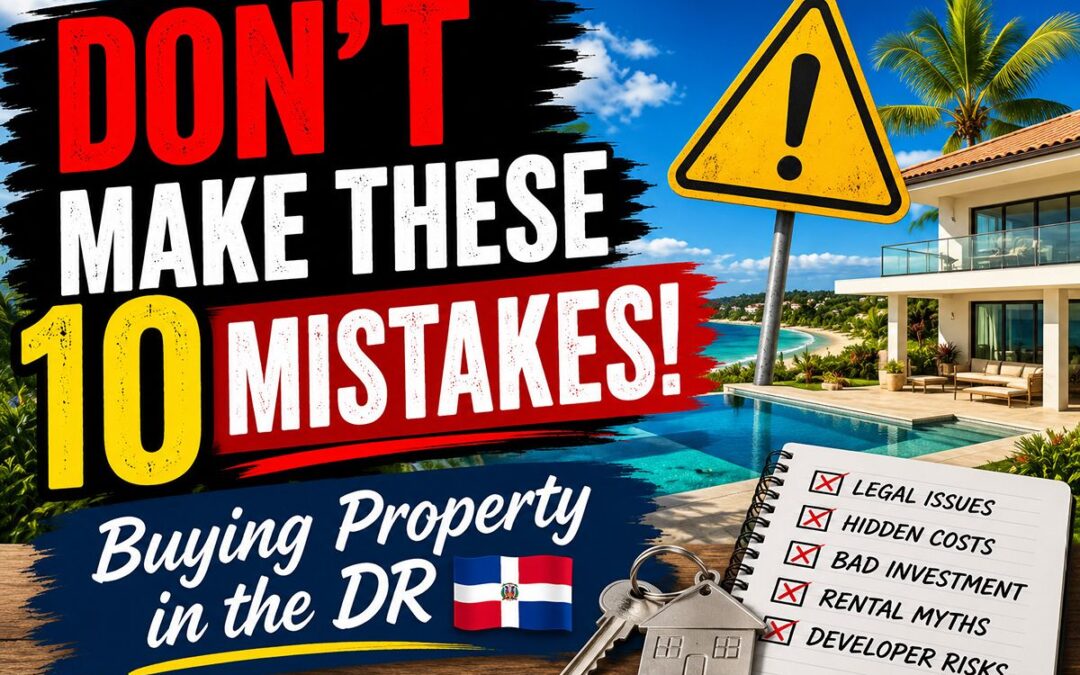
🇩🇴 10 Biggest Mistakes Buying Property in the Dominican Republic
🇩🇴 10 Biggest Mistakes Buying Property in the Dominican Republic
10 Biggest Mistakes in DR Property Investing
10 Biggest Mistakes Buying Property in the Dominican Republic: The Dominican Republic has become an increasingly attractive destination for international property buyers looking for sunshine, Caribbean lifestyle, retirement opportunities, vacation homes and real estate investment.
From Sosúa and Cabarete to Puerto Plata and communities throughout the North Coast, buyers can find everything from affordable condominiums and tropical villas to luxury homes, beachfront property, building lots and pre-construction developments.
But buying property in the Dominican Republic is not the same as buying property in the United States, Canada, the UK or Europe.
And that’s important.
How to Buy Dominican Republic Real Estate Safely, Intelligently & With Confidence
Over 50 Years Experience Living and Working in the DR
After more than 50 years of combined experience living, working and doing business in the Dominican Republic, we’ve seen some outstanding property purchases.
We’ve also seen situations that could have been avoided with better advice, better due diligence and better representation.
The good news?
Buying real estate in the Dominican Republic doesn’t need to be complicated or frightening. You simply need to understand the market you’re buying into.
Here are 10 of the biggest mistakes foreign property buyers make in the Dominican Republic — and how you can avoid them.
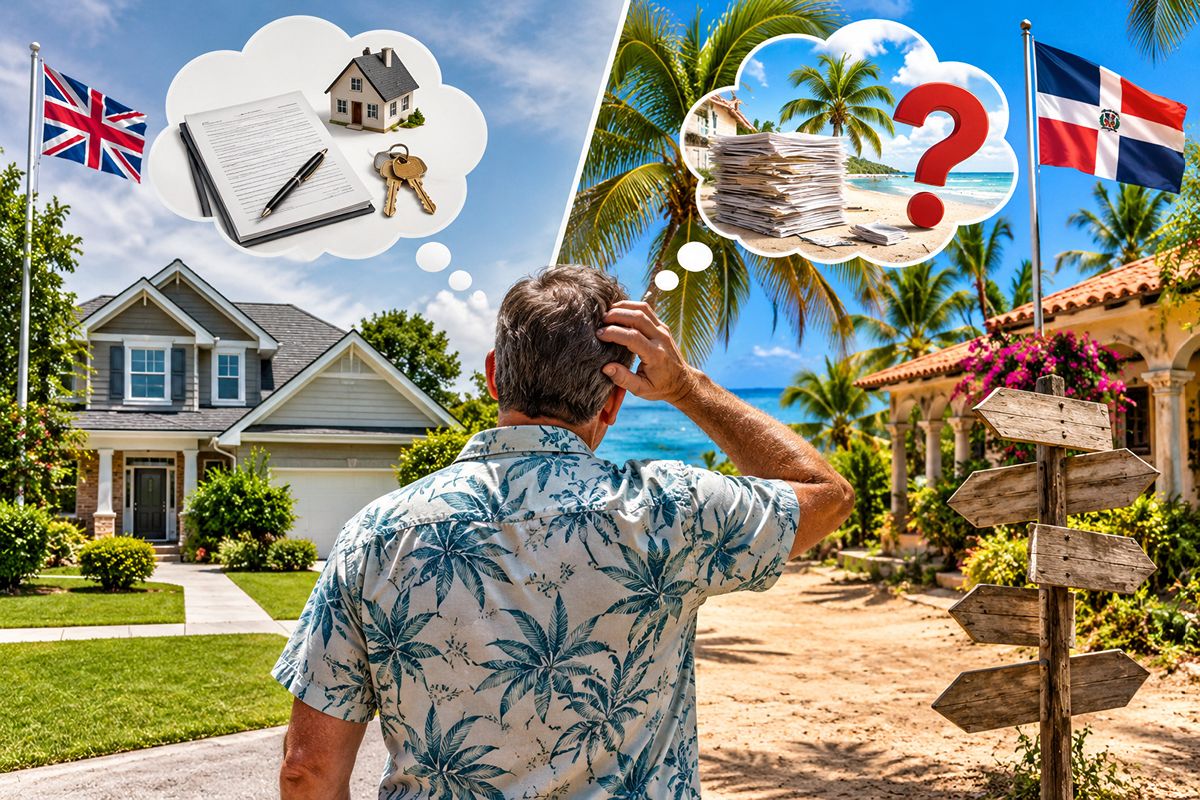
1️⃣ Assuming Buying Property in the DR Works Like Back Home
10 Biggest Mistakes Buying Property in the Dominican Republic
Perhaps the first mistake is arriving in the Dominican Republic expecting the property-buying process to operate exactly as it does in your home country.
It doesn’t.
The language is different. Legal procedures and conventions can be different. Construction practices, financing, negotiations, timelines and business culture can also differ significantly.
That doesn’t necessarily make buying property in the DR more difficult — it simply makes local knowledge considerably more important.
An experienced buyer understands that purchasing property internationally means learning the rules of the market in which they’re investing rather than assuming the rules from home will automatically apply.
💡 DR Property Guys Tip
Understand the rules of the game you’re playing.
Ask questions. Never be embarrassed to request clarification, and make sure you fully understand documents before signing them.
2️⃣ Trying to Build Your Dream Villa Without the Right Team
Buying land in the Dominican Republic and building your own tropical villa can sound incredibly appealing.
And with the right people involved, it can be.
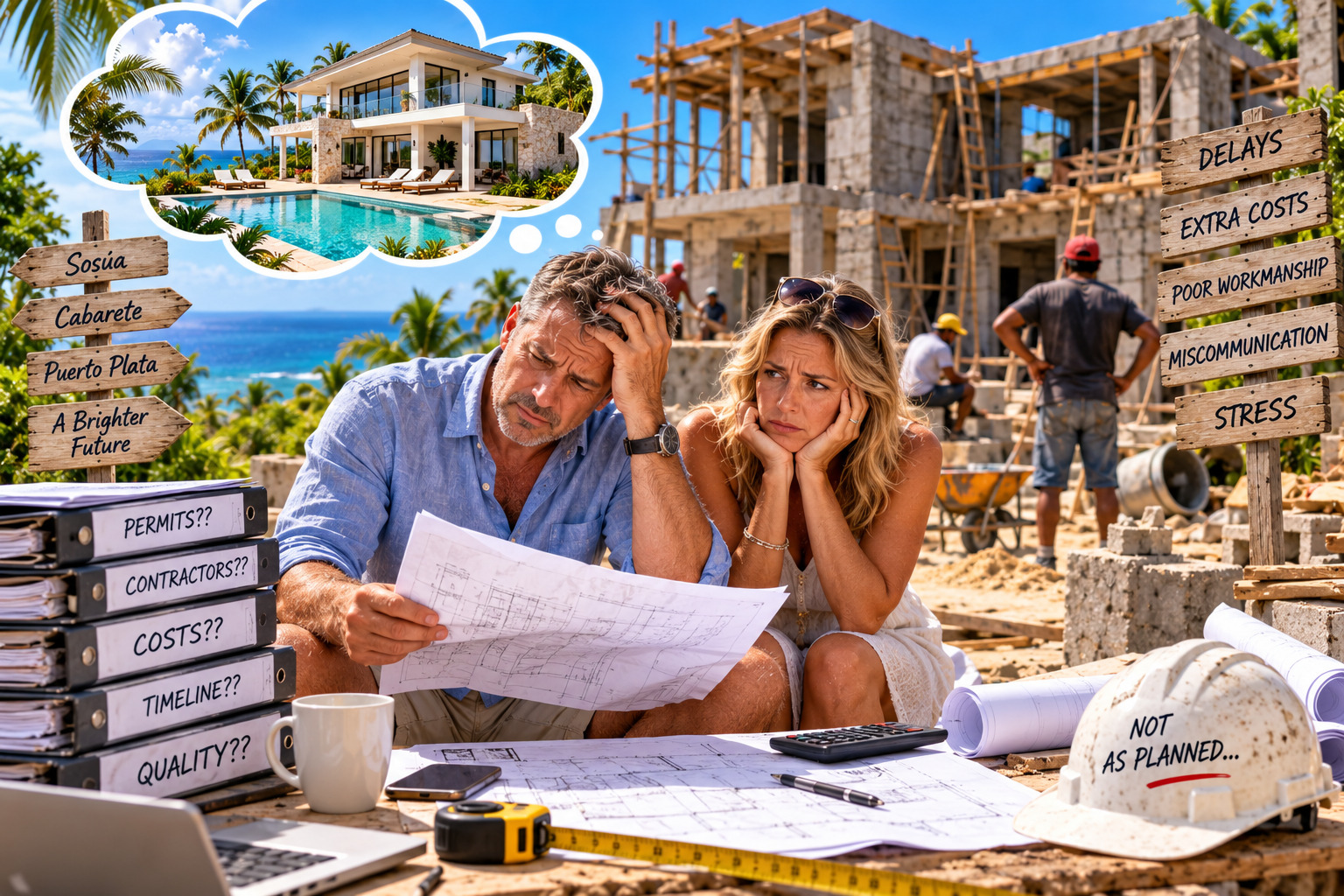
Don’t Go it Alone
But independently managing a construction project from overseas — or without significant construction experience and local knowledge — can quickly become challenging.
A building project can involve architects, engineers, contractors, permits, approvals, materials, suppliers, utility connections, labour requirements, budgets, inspections and countless decisions along the way.
Language matters too.
Much of the day-to-day communication between contractors, workers, suppliers and authorities will naturally take place in Spanish.
If you’re considering buying land and building a house in the Dominican Republic, make sure you have a competent professional team on the ground and understand the complete process before construction begins.
There is a reason abandoned and unfinished projects occasionally appear around the country.
Building your Caribbean dream home can be enormously rewarding — but good preparation is considerably cheaper than fixing mistakes later.
3️⃣ Buying Pre-Construction Without Researching the Developer
The renderings look spectacular.
Infinity pool. Tropical landscaping. Designer kitchen. Ocean views.
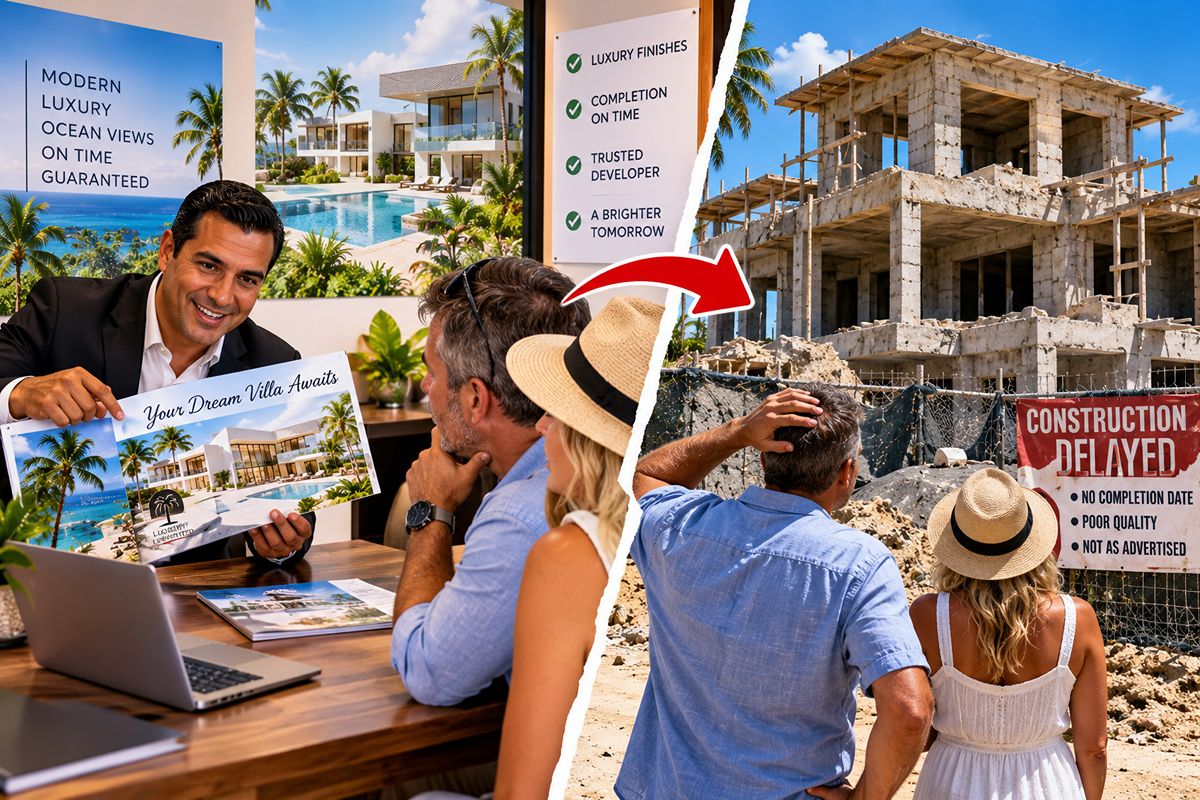
Do Your Research
But when buying pre-construction property in the Dominican Republic, you’re not actually buying the rendering.
You’re placing considerable trust in the company responsible for turning that rendering into reality.
Before committing, investigate the developer’s:
- Previous completed projects
- Years in business
- Local reputation
- Construction quality
- Delivery history
- Financial and operational track record
- Previous owners’ experiences
- Approach to warranties and post-completion issues
Whenever possible, visit something the developer has already completed and speak with existing owners.
Ask whether their property was delivered approximately when expected. Ask whether the finished product matched what was promised. Ask about additional costs and, perhaps most importantly, ask what happened when something went wrong.
⭐ Remember:
You’re not buying the brochure — you’re buying the developer’s ability to deliver what’s in the brochure.
4️⃣ Buying Dominican Republic Property Remotely – Doesn’t Mean You Have to do it Blindly
Can you successfully buy property in the Dominican Republic without being physically present?
Absolutely.
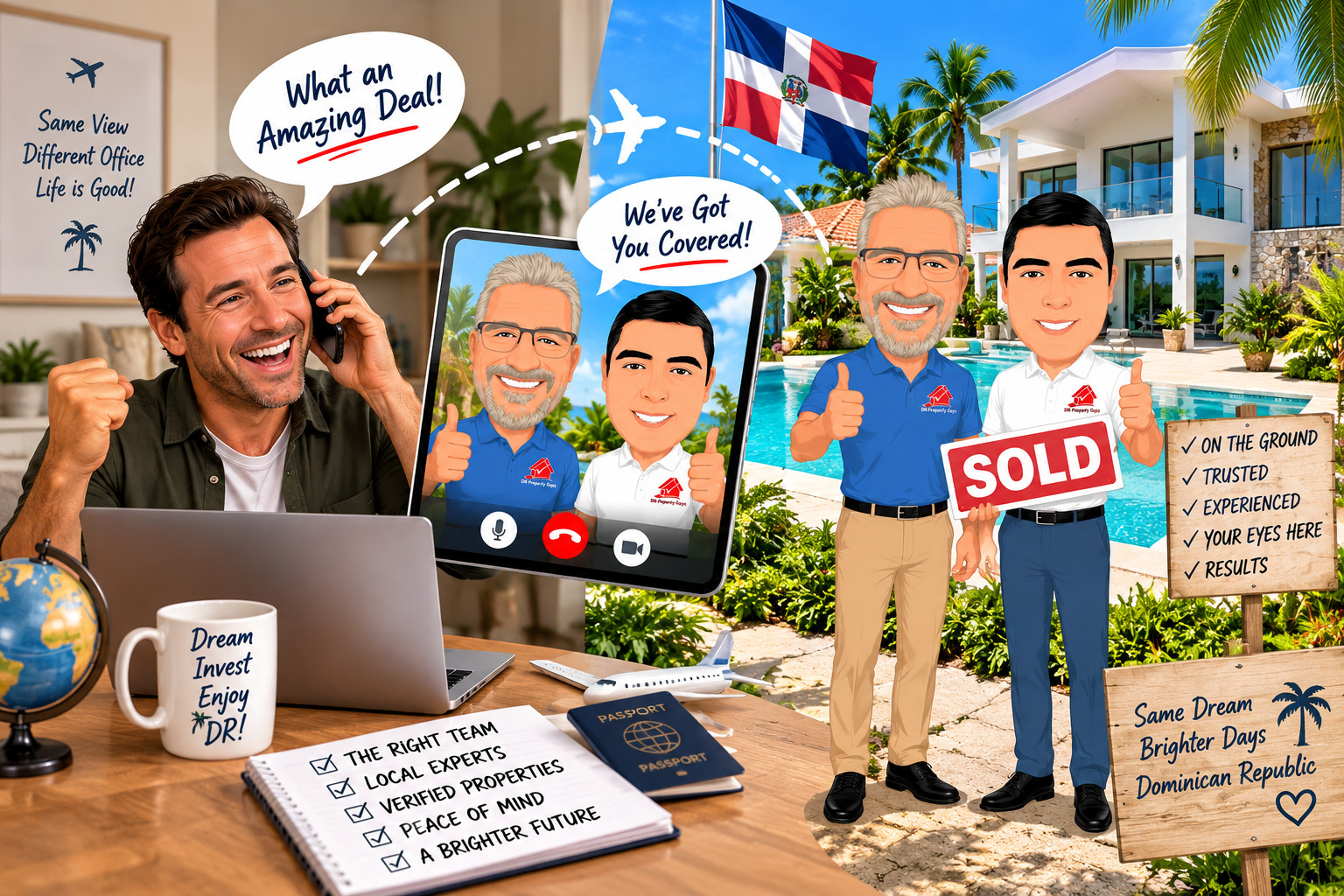
We’ve Got You Covered
Technology has transformed international real estate. Detailed video tours, video calls, digital documentation and professional representation can make a remote purchase entirely practical.
But there’s an important distinction:
Buy remotely. Don’t buy blindly.
Photographs and beautifully produced videos don’t necessarily reveal everything.
They may not adequately demonstrate road conditions, neighbouring construction, drainage, noise, dampness, finishing quality, water pressure or the general atmosphere of a neighbourhood.
And let’s face it — a good wide-angle lens can make almost anything look enormous!
If you cannot personally inspect a property, have someone you genuinely trust inspect it on your behalf.
A good representative shouldn’t simply confirm what’s attractive about a property.
They should be actively looking for reasons you might not want to buy it.
5️⃣ Don’t Believe Every Rental-Income Projection – Always Do Your Due Dilligence
Buying an investment property in the Dominican Republic can provide both lifestyle benefits and potential rental income.
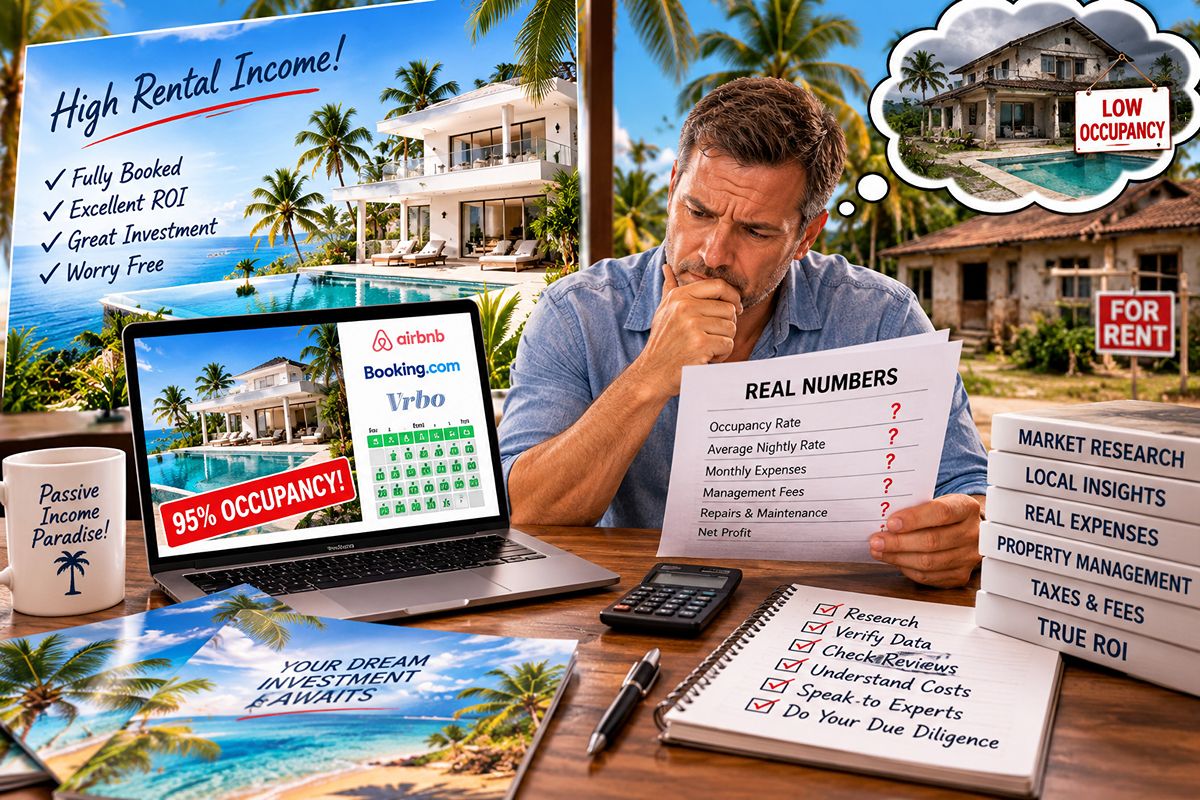
10 Biggest Mistakes Buying Property in the Dominican Republic
But be cautious when presented with spectacular projected returns.
10%… 12%… 15%…
The immediate question should be:
Based on what?
Projected gross rental revenue and the money eventually remaining in your pocket are two very different numbers.
Gross Rental Income ≠ Net Return
A realistic investment analysis may need to consider:
- Actual achievable nightly rates
- Realistic occupancy
- High and low seasons
- Property-management fees
- Electricity
- Cleaning
- Repairs and maintenance
- HOA fees
- Insurance
- Booking-platform commissions
- Replacement of furniture and appliances
- Taxes where applicable
Whenever meaningful historical information exists, ask to see it.
Projections can be useful — but they are still projections.
A spreadsheet isn’t rental history.
For anyone buying Dominican Republic real estate as an investment, conservative numbers are generally much more useful than spectacular ones.
6️⃣ Underestimating the True Cost of Property Ownership
The purchase price isn’t the final number you should consider when deciding whether a property makes financial sense.
Depending upon the property, ongoing expenses may include:
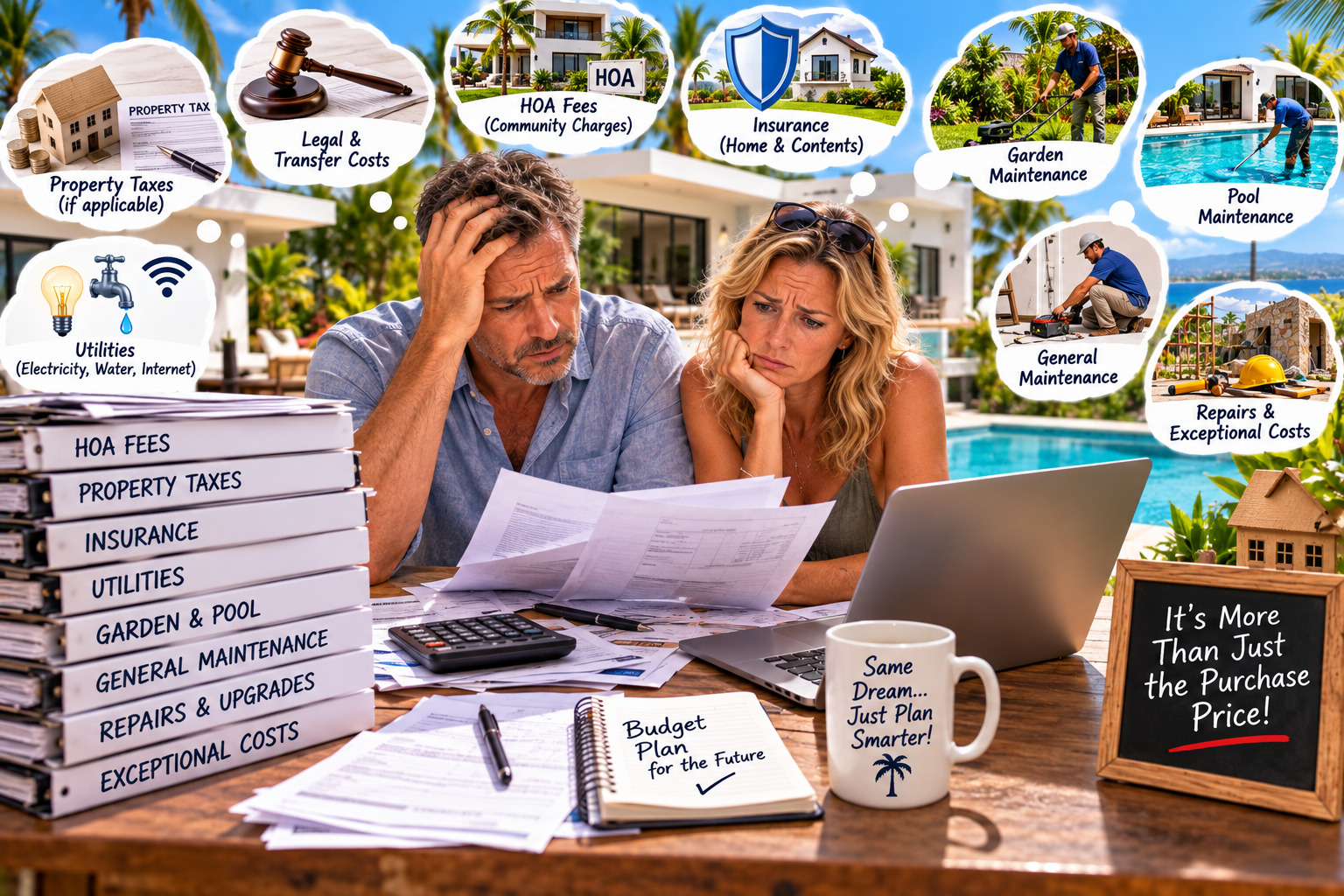
Make a Complete Budget
HOA fees | Electricity | Insurance | Pool maintenance | Gardening | General maintenance | Property management | Repairs | Property taxes where applicable
A large private villa with extensive gardens and a swimming pool naturally has a different ownership profile from a two-bedroom condominium where many common expenses are incorporated into the HOA.
So don’t simply ask:
❌ “Can I afford to buy this property?”
Also ask:
✅ “What will this property realistically cost me each year to own?”
That one question can completely change how you compare different homes for sale in the Dominican Republic.
7️⃣ Looking Only at the HOA Fee — Not the HOA
This is particularly important when considering condos and gated-community properties in Sosúa, Cabarete, Puerto Plata and elsewhere in the Dominican Republic.
Buyers naturally want to know:
“How much is the HOA?”
But the amount is only part of the story.
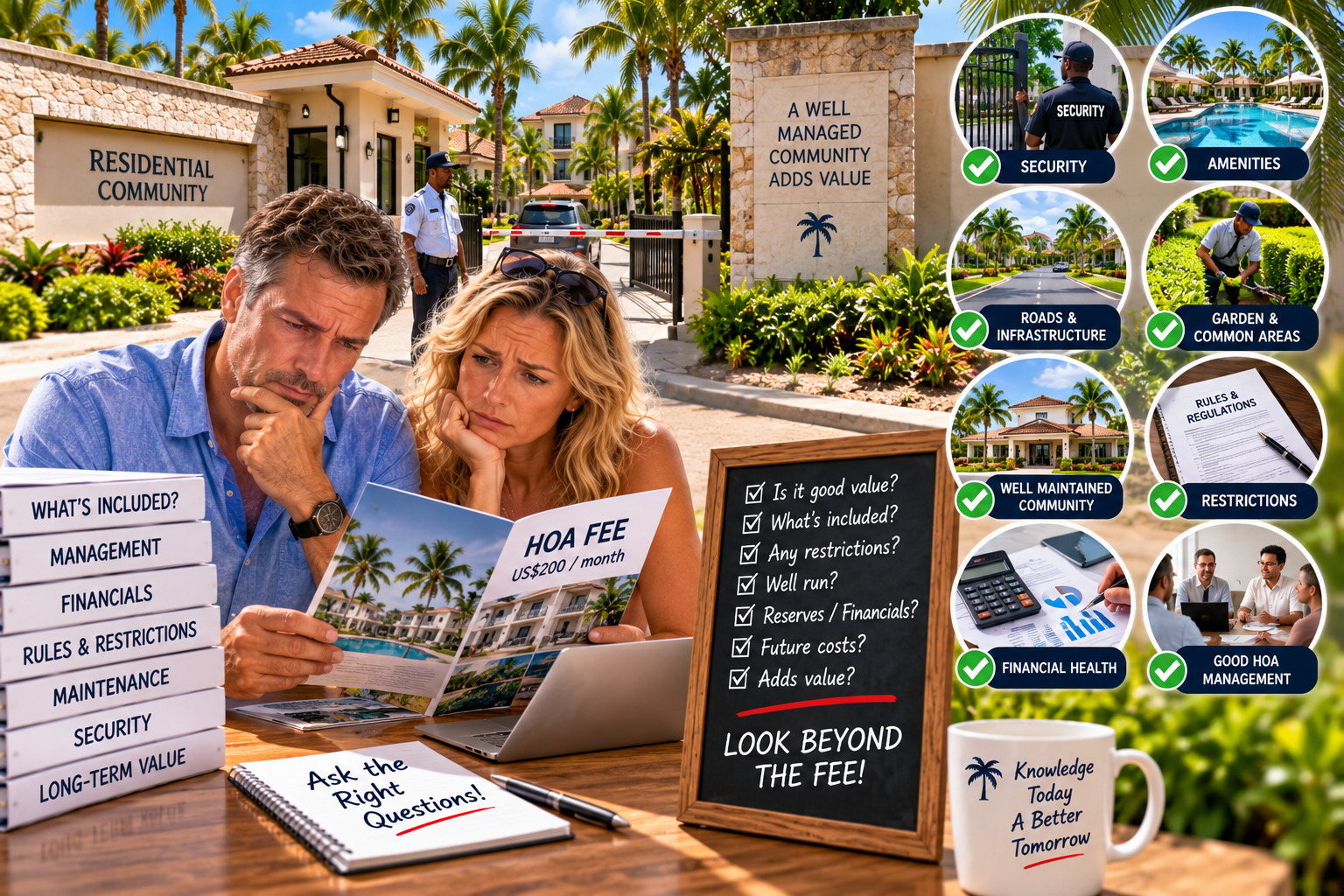
Know Your HOA Agreement
You should also understand what the HOA provides and how effectively the community is managed.
Questions might include:
- What exactly does the HOA fee include?
- Are the common areas well maintained?
- Are there adequate financial reserves?
- Have there been special assessments?
- What are the short-term rental rules?
- Are there pet restrictions?
- Are renovations controlled?
- How are roads and facilities maintained?
- Is security included?
- How are future infrastructure expenses handled?
A cheap HOA isn’t necessarily a good HOA.
Likewise, a higher HOA isn’t necessarily bad value if it provides excellent services, infrastructure and maintenance.
A professionally managed community can help protect two things that matter enormously:
Your quality of life and the long-term desirability of your investment.
8️⃣ Falling in Love With a Property Without Thinking About Resale
You walk through the front door.
You see the pool.
The palm trees are swaying.
And suddenly you’re mentally deciding where the sofa is going.
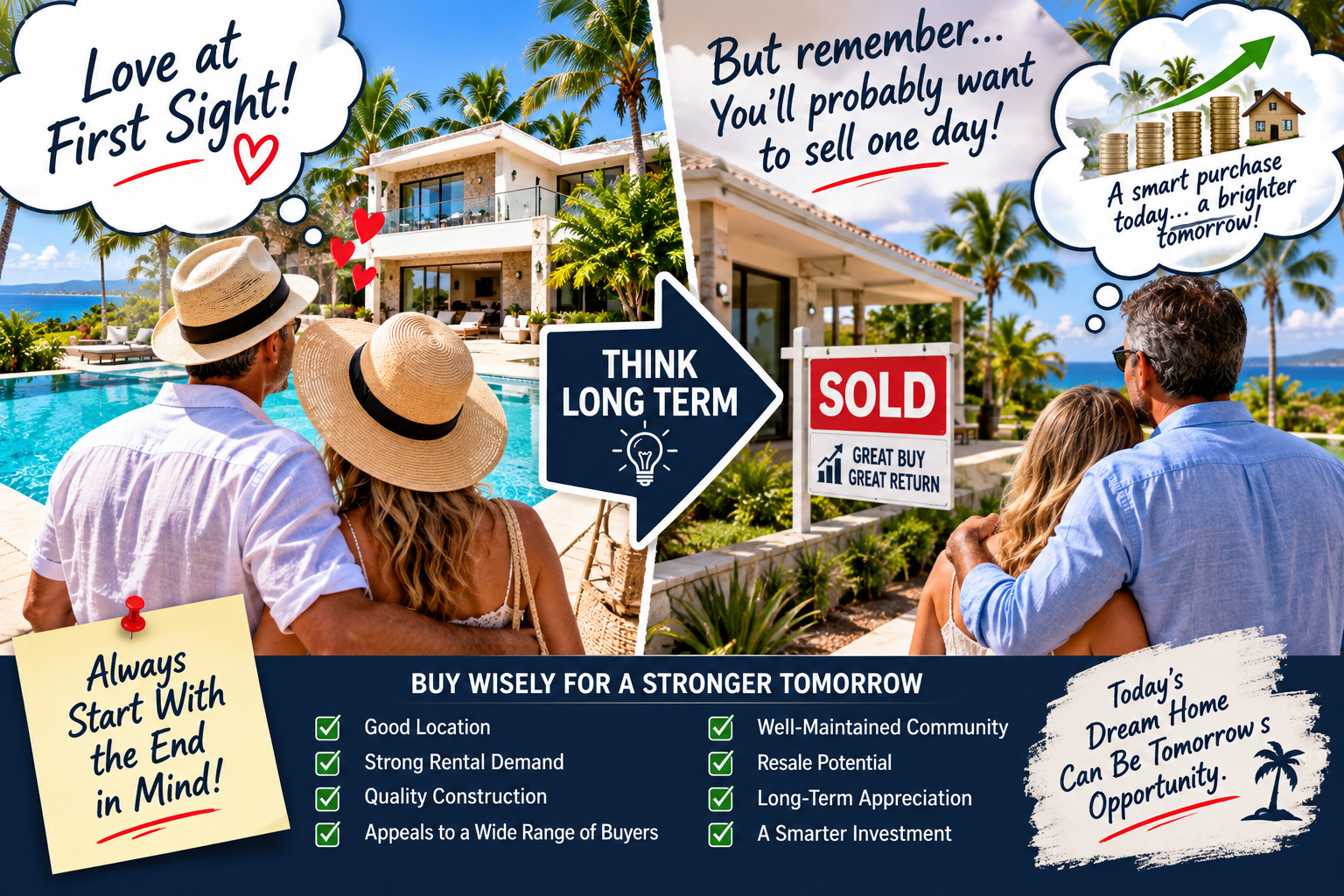
Begin With the End in Mind
We understand!
But before buying any villa, condo or vacation home in the Dominican Republic, ask another question:
“Will somebody else want to buy this property when I eventually decide to sell?”
Consider its:
Location • Accessibility • Community • Floor plan • Number of bedrooms • Maintenance requirements • Rental potential • Surrounding development • Buyer demand • Resale appeal
You may intend to live there forever.
Life sometimes has other ideas.
Family circumstances change. Financial circumstances change. People relocate. Investment strategies change.
Therefore:
The day you buy a property is also the beginning of your future resale strategy.
Buying something you love and something the wider market is likely to find desirable is usually a much stronger combination.
9️⃣ Not Using a Competent Independent Dominican Real Estate Lawyer
This is one area where shortcuts simply aren’t worth taking.
Your real estate agent and lawyer perform different functions, and both have important roles.
An experienced independent attorney should undertake the appropriate legal due diligence for the particular transaction, which may include matters involving:
Title • Legal ownership • Liens and encumbrances • Property boundaries • Taxes • Contracts • Permits • Corporate ownership and other relevant documentation
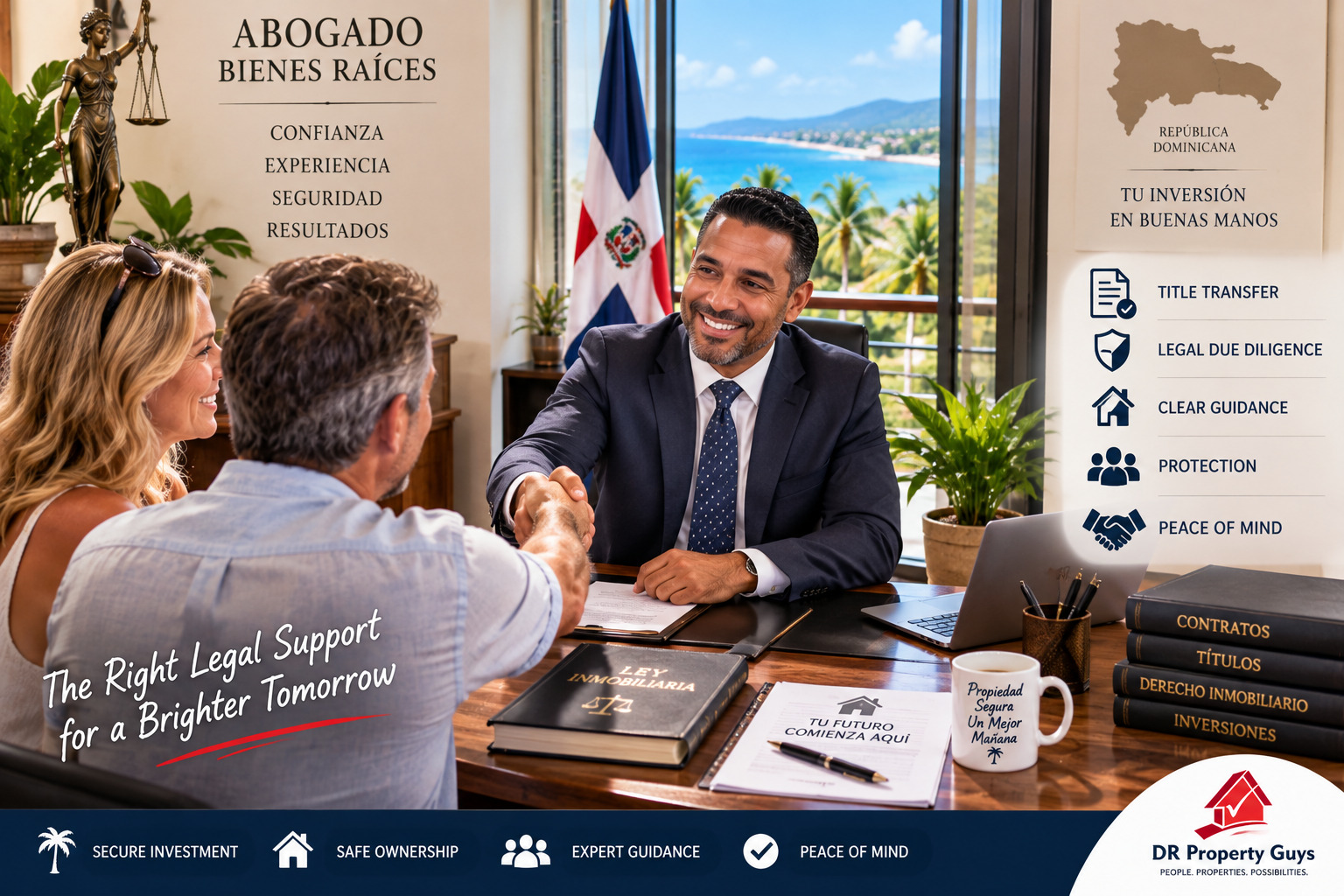
Always Work with a Competent & Reputable Lawyer
Your lawyer should represent your interests.
Think of it this way:
🏡 GOOD AGENT = PROPERTY & MARKET DUE DILIGENCE
⚖️ GOOD LAWYER = LEGAL DUE DILIGENCE
A smart buyer wants both.
Never allow the excitement of finding your dream Caribbean property to make proper legal due diligence seem like an inconvenience.
🔟 Choosing the Wrong Real Estate Agent in the Dominican Republic
This may be one of the most important decisions you make.
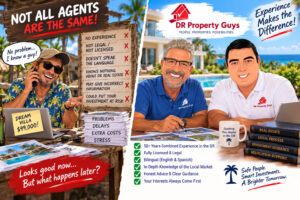
An excellent Dominican Republic real estate agent should bring considerably more to the table than simply opening doors and showing properties.
When choosing someone to represent you, consider their:
- Legal authorization to work in the Dominican Republic

Experience Matters
- Genuine local experience
- Years living and working in the country
- English/Spanish communication ability
- Knowledge of different communities
- Understanding of developers and construction
- Familiarity with realistic property values
- HOA knowledge
- Rental-market understanding
- Resale knowledge
- Negotiating experience
- Understanding of Dominican business culture
- Professional network
- Availability and attention to your needs
- After-sales support
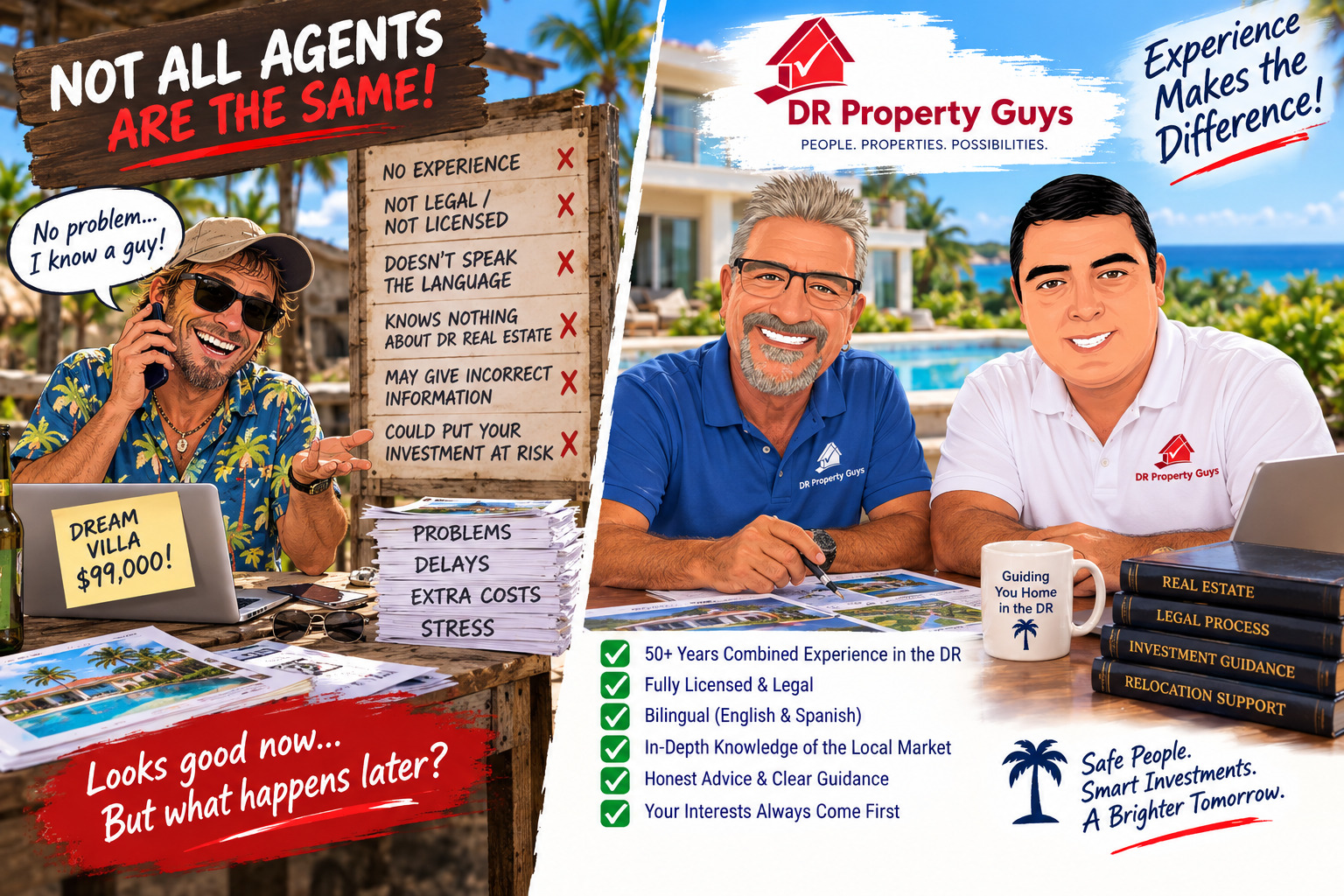
Why is being genuinely bilingual so valuable?
Because many important conversations behind a transaction naturally take place in Spanish — with property owners, lawyers, administrators, developers, contractors and other professionals.
Your representative needs to understand not only what is being said, but sometimes the context behind it.
And perhaps most importantly, your agent should be prepared to tell you something you don’t necessarily want to hear.
⭐ “A good agent shouldn’t only tell you why you SHOULD buy a property. Sometimes their most valuable advice is telling you why you SHOULDN’T.”
That’s not losing a sale.
That’s doing the job properly.
🌴 Should Foreigners Be Afraid of Buying Property in the Dominican Republic?
No.
That isn’t the message of this article at all.
The Dominican Republic can be an extraordinary place to live, retire, invest, relocate or own a Caribbean vacation home.
The North Coast in particular offers a remarkable variety of lifestyles — from the beaches and international atmosphere of Sosúa and Cabarete to Puerto Plata and the many residential communities dotted along the coast.
But international real estate deserves the same careful thinking as any significant investment.
Most serious problems become considerably less likely when buyers combine:
📍 Local Knowledge + ⚖️ Good Lawyer + 🏡 Good Agent + 🔎 Proper Due Diligence + 🧠 Common Sense
Our advice is simple:
🇩🇴 DON’T BE AFRAID TO BUY IN THE DR. JUST BUY SMART.
🏡 Looking for Property in the Dominican
DR Property Guys
Republic? Meet DR Property Guys
At DR Property Guys, Tay & Phil bring more than 50 years of combined experience living, working and doing business in the Dominican Republic.
That experience extends far beyond simply selling property.
We understand the communities, the culture, the language and many of the practical realities involved in buying and owning a home here.
Whether you’re searching for Dominican Republic real estate, a Sosúa villa, Cabarete condo, North Coast investment property, retirement home, vacation property or simply researching a possible move to the DR, we’re always happy to help.
And our philosophy is straightforward:
We’d rather help you find the right property than simply sell you a property.
📞 Contact DR Property Guys Today
Tay: +1 (809) 756-7611
Phil: +1 (809) 707-3598
🎥 And don’t forget to subscribe to the DR Property Guys YouTube channel for property tours, Dominican Republic real estate advice, lifestyle videos and insider tips on living, relocating and investing in the Dominican Republic.

Social Links: